Category: Uncategorized

  • Editing Wikipedia: The Wolf Entertainment Article

    Editing Wikipedia: The Wolf Entertainment Article

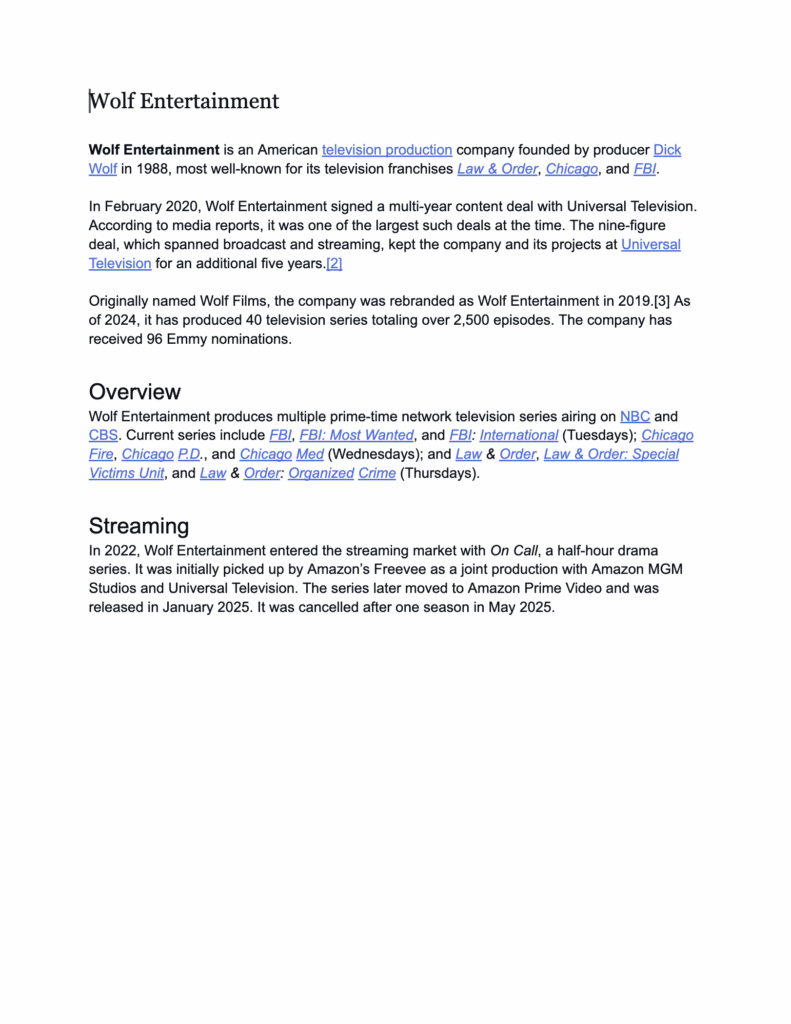
    Here are the changes I made in suggesting mode on a Google Doc showing the original language from Wikipedia.
    Screenshot of original language for Wolf Entertainment Article on Google Doc. Curated By: John Rhorer July 2025.
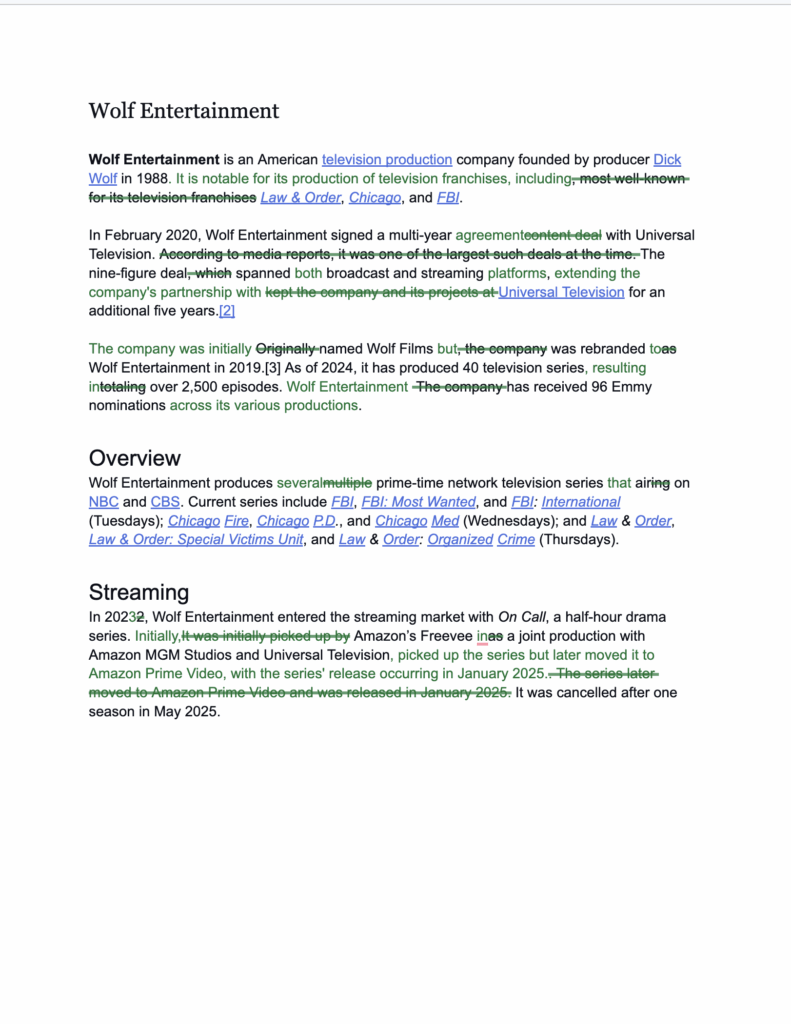
    Here are the changes I made in suggesting mode on a Google Doc displays the modified language.
    Screenshot displaying modified language of Wolf Entertainment article. Curated By: John Rhorer July 2025.
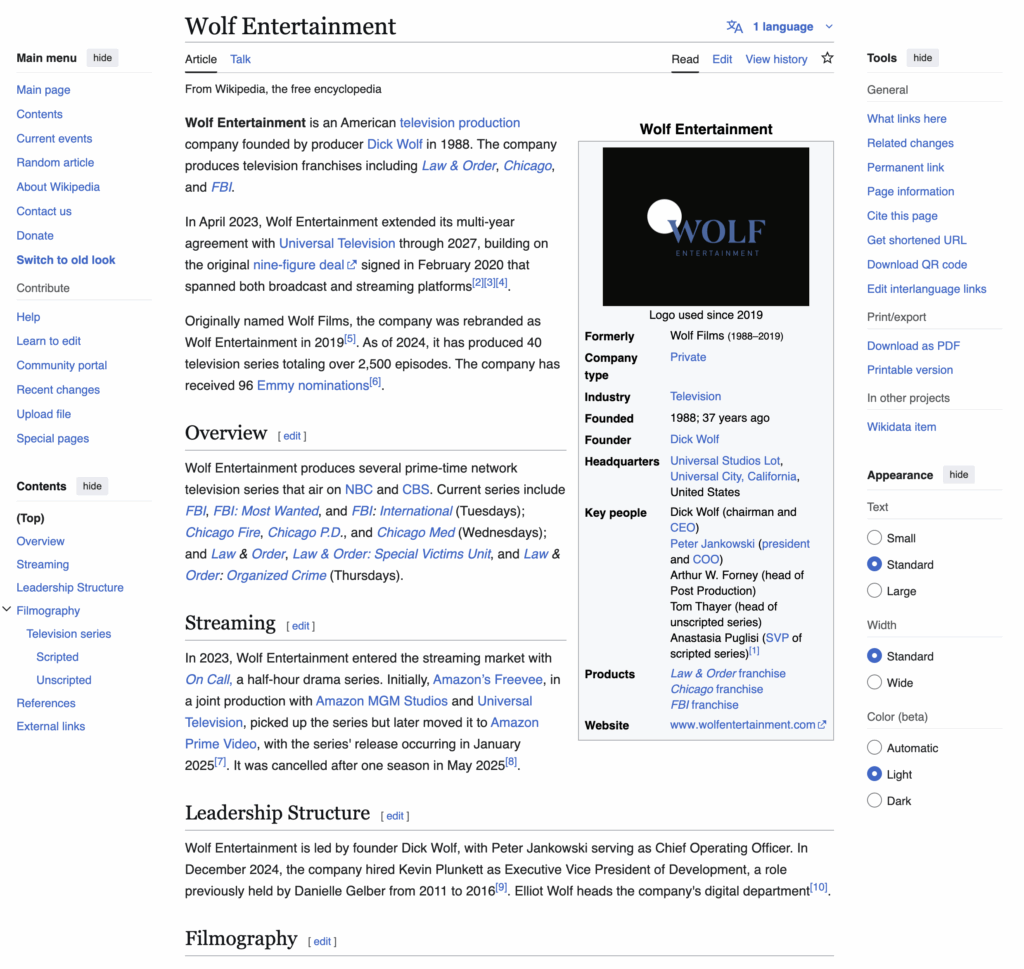
    Screenshot of the Wolf Entertainment article on Wikipedia immediately after John made the edit.
    Screenshot of Wolf Entertainment Wikipedia Article. Curated By: John Rhorer July 2025.
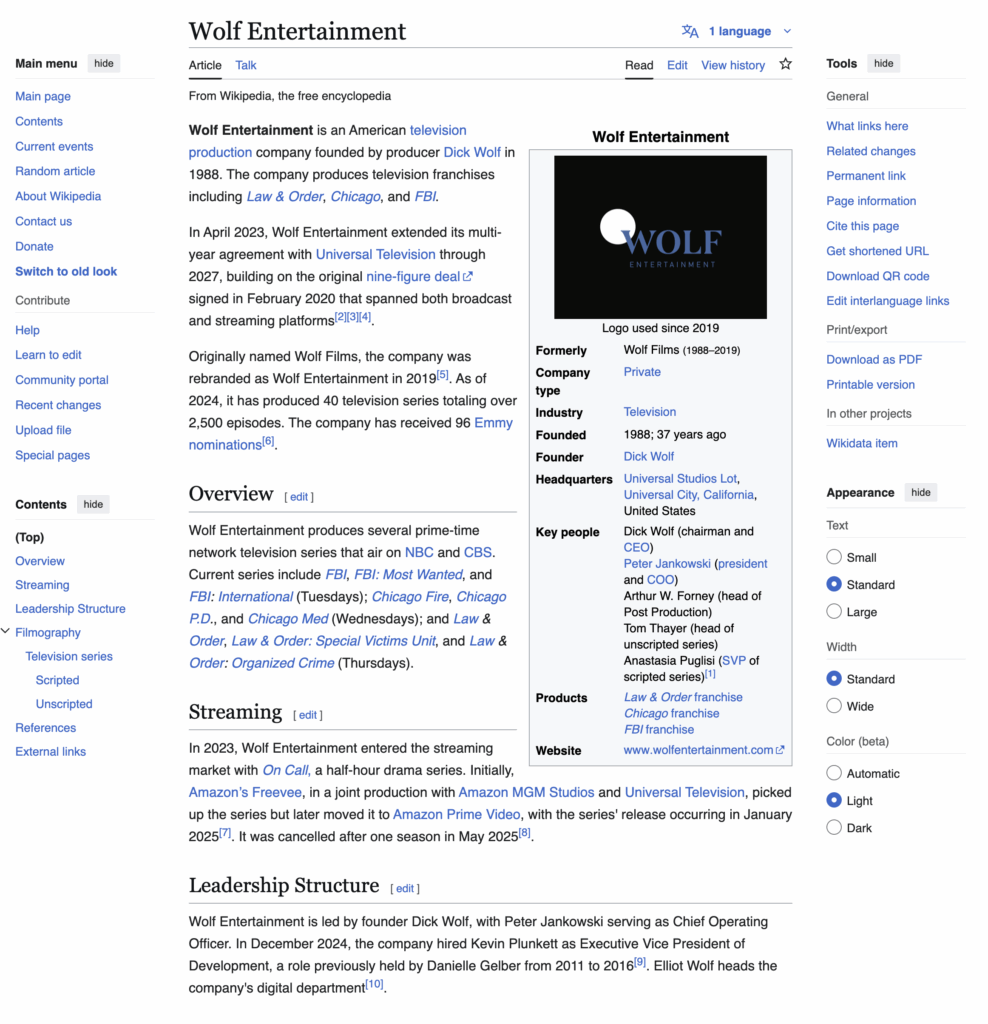
    Screenshot of the Wolf Entertainment article on Wikipedia days after John made the edit.
    Screenshot of Wolf Entertainment article, days after editing. Curated By: John Rhorer July 2025.
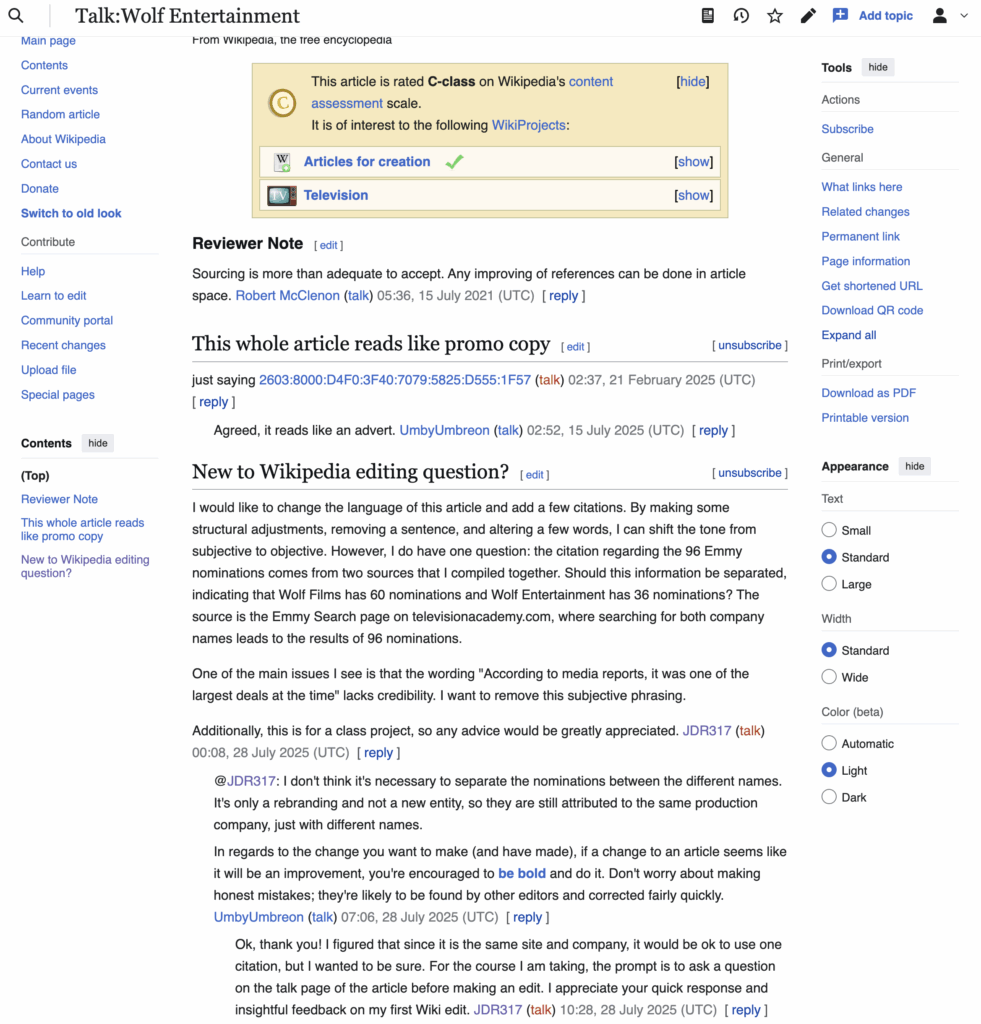
    Screenshot of talk page conversation for Wolf Entertainment Article Curated By: John Rhorer, July 2025
    Screenshot of talk page conversation for Wolf Entertainment Article Curated By: John Rhorer, July 2025

  • Exploring AI Text Generation: Correcting Factual Errors in a Comparison of Camera Specifications.

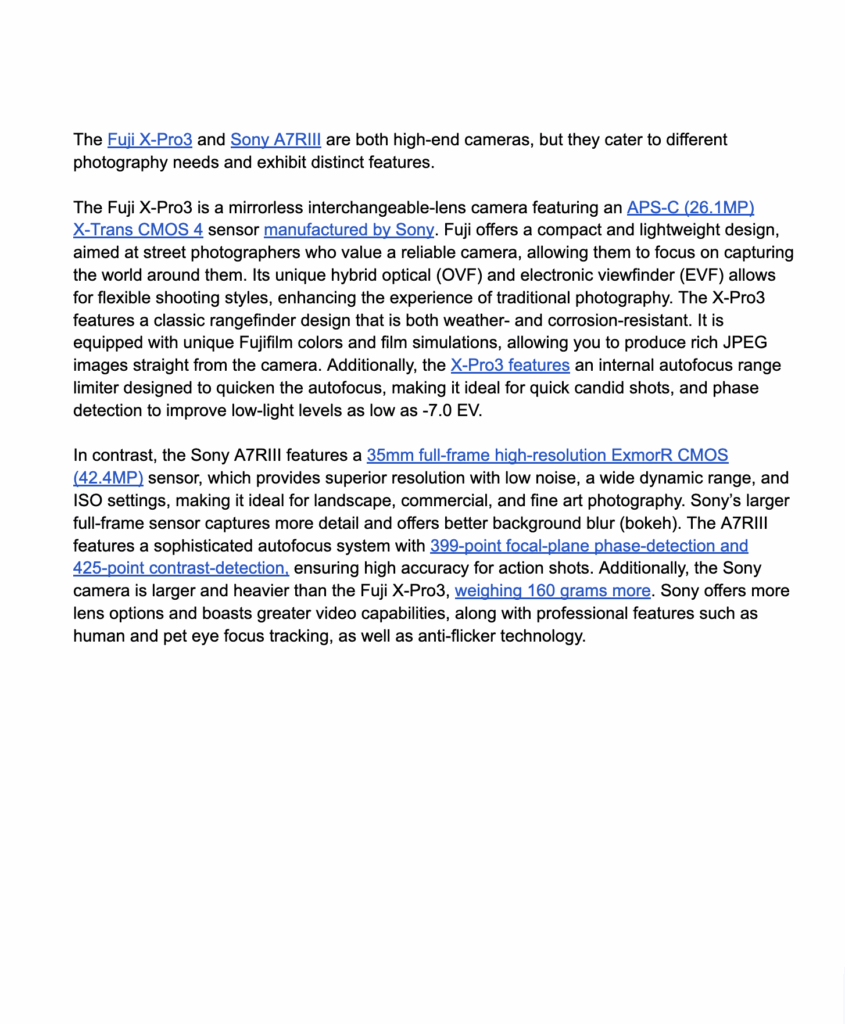
    Exploring AI Text Generation: Correcting Factual Errors in a Comparison of Camera Specifications.

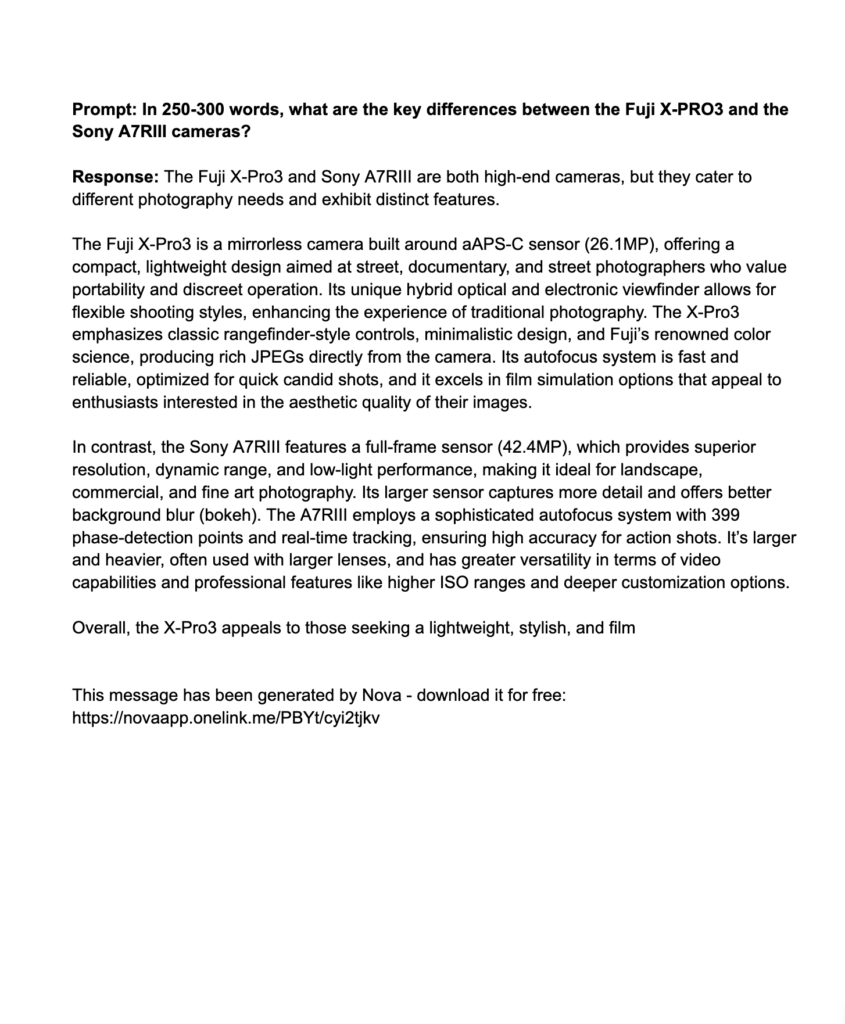
    AI-generated example of a blog post about the key differences between the Fuji X-Pro3 and the Sony A7RIII cameras. Screenshot of John's Google Doc.
    Screenshot of John’s Google Doc. Capture of response provided by Nova ChatGPT Unedited (July 2025)
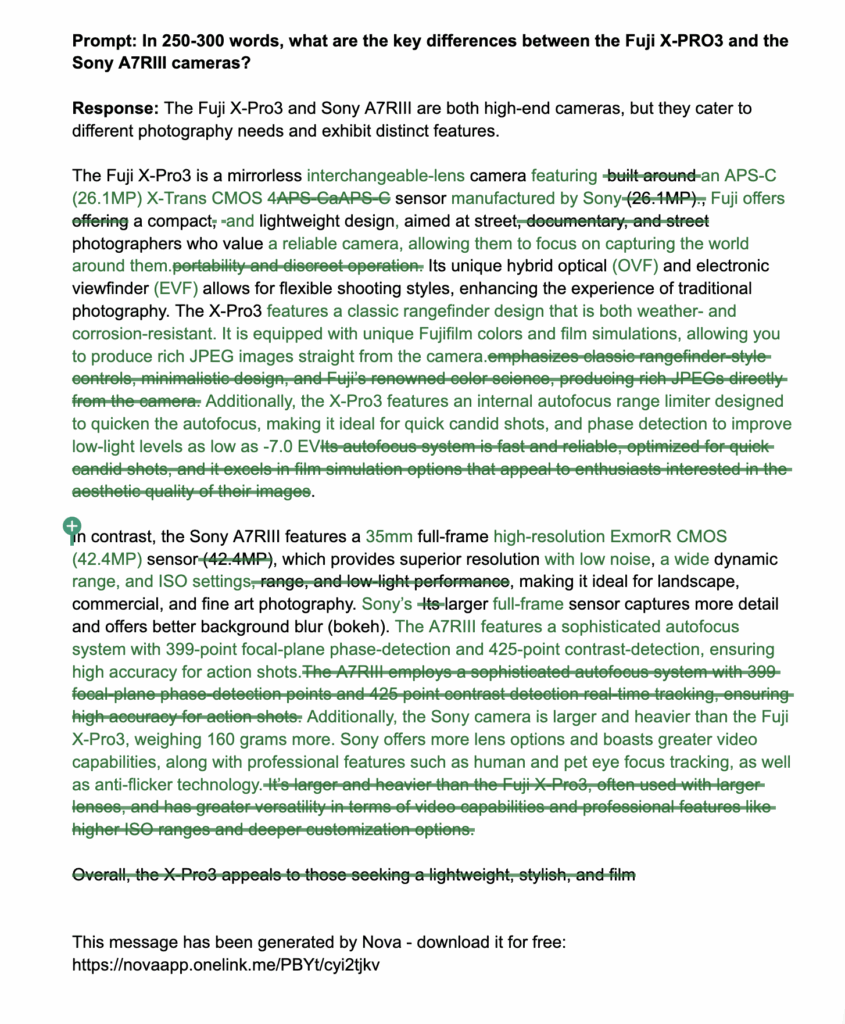
    AI-generated example of a blog post about the key differences between the Fuji X-Pro3 and the Sony A7RIII cameras. Screenshot of John's Google Doc Edit suggested copy.
    Screenshot of John’s Google Doc. Capture of response provided by Nova ChatGPT Edited (July 2025)
    Corrected and linked example for a blog post about the key differences between the Fuji X-Pro3 and the Sony A7RIII cameras. Screenshot of John's Google Doc.
    Screenshot of John’s Google Doc. Edited and written in John’s voice using hyperlinks (July 2025)
  • Exploring Civic Imagination through the film “Black Panther”: Why it stands out.

    Hello, blog universe! This week in my Digital Media Literacy class, we started learning about the concept of the Civic Imagination Project. It’s all about recognizing our roles as civic agents to spark change, build a sense of collective identity, and embrace empathy for others, especially those who may be different from us. As a huge Marvel fan, I couldn’t resist choosing “Black Panther” as my focus for this composition.

    So why “Black Panther“? Well, it stands out from the typical superhero narrative by emphasizing the power of the collective over the individual. This film is a reimagining that challenges how many of us view African identity through the lens of American media.

    “Black Panther” was directed by Ryan Coogler and hit theaters in 2018, “Black Panther” features the late Chadwick Boseman as T’Challa, the king of the technologically advanced fictional African nation of Wakanda. The film opens with a glimpse into the socio-economic struggles in Oakland, California, in 1992 before returning to the world of Wakanda, a place rich in African culture and cutting-edge technology. Through this contrast, “Black Panther” depicts Wakanda and its people in a positive light through identity, empowerment, and community, pushing back against the negative stereotypes often associated with Africa.

    The film is reimagined as an alternative to the historical views many perceive of the African continent and its people, with images of poverty and conflict. Instead, the film repositions the African people as leaders and stewards instead of casting them as victims of years of historical injustices. Watching this film allows audiences to rethink preconceived notions about Africa’s cultural diversity and its innovative spirit.

    The narrative told throughout “Black Panther” is not just about entertainment; it’s about sparking change in how stories are told surrounding culture. The film not only depicts African culture positively but further showcases the incredible strength of sisterhood among its female characters, revealing their vital leadership roles within Wakandan society. It tackles the complexities of race and culture, encouraging us to see ourselves as potential agents of social change. This reexamination of our societal attitudes calls for a systemic change in how we portray African experiences and the values of gender and racial equality.

    One of the standout moments for me is the speech at the end of the movie, where T’Challa addresses the United Nations and delivers a resonant message: “We will strive to be an example of how we, as brothers and sisters on this earth, should treat one another. Now, more than ever, the illusions of division pose a threat to our very existence.” These words not only underline the need for unity but reflect the heart of civic imagination itself.

    “Black Panther” is playing a vital role in dismantling long-standing stereotypes about race, African culture, and gender roles. It has made the Black community feel seen and sparked necessary dialogues around representation. Plus, let’s not forget how the Wakanda Forever salute has become a pop culture phenomenon, akin to the three-fingered salute from “The Hunger Games.” The visibility for social justice and cultural identity since the film’s release has been remarkable, even though Wakanda itself is an aspirational idea.

    To wrap it up, “Black Panther” is more than just a superhero movie; it’s a cultural milestone redefining narratives about African identity and empowerment. Its influence stretches beyond entertainment, inspiring us to envision a future where diversity and innovation thrive. Engaging with such transformative works not only broadens our perspectives on social issues but also fuels our passion for advocating positive change. As we lift up diverse narratives, we move closer to the ideals of unity, respect, and equity that “Black Panther” so powerfully embodies.

  • Media Stereotypes: The Portrayal of Father Figures in Media

    The assignment this week was to identify a stereotype about ourselves that we have seen in the media. As a divorced middle-aged father of two, I have witnessed the portrayal of the father figure and dads like me frequently depicted as out of touch, pitiful, irresponsible, or even incompetent in media, especially sitcoms. However, these stereotypes miss the mark regarding the reality of our lives and experiences. While some representations might resonate with certain people, they don’t capture the whole picture.

    Looking back at my time growing up watching reruns of “The Andy Griffith Show” and “Leave it to Beaver,” the father figure was depicted as a wise authority figure. Fast forward to today, and we see a stark contrast in series like “Modern Family” and “Everybody Loves Raymond,” where fathers are often depicted in a humorous yet inept light.

    In the media today, we often see the portrayal of dads as clueless, stuck in their ways, and frequently on the receiving end of a joke. Knowing I am not the only one who feels this way, I searched for some studies and found a study from UCLA that examined 34 top-rated sitcoms that aired between 1980 and 2017, analyzing 578 scenes where fathers engaged in “disparagement humor.” In these moments, dads either took jabs at other characters or found themselves on the receiving end of the humor.

    Sadly, the portrayal of fatherhood today is often skewed. These narratives commonly overlook single fathers who are actively engaged in their children’s lives and fail to represent fathers from marginalized communities. The missing narrative reinforces harmful stereotypes that link fatherhood to irresponsibility and often criminality.

    The most persistent stereotype that we see ties masculinity to emotional incompetence. Viewing men as incapable of nurturing paints an unfair picture of gender roles in the family. Interestingly, research points out that fathers are depicted negatively in today’s media a staggering eight times more often than mothers. The skewed representation distorts the real understanding of family roles. Often, the narrative shifts the emotional roles squarely onto the role of the mother, which undervalues them, and the father’s role.

    The portrayal of father figures in the media often lacks depth and variety. It’s important to challenge these narratives and reshape public perception. Rather than depicting fathers in a one-dimensional way, we should showcase them in a diverse range of stories and situations that accurately reflect their roles in family life. By doing so, we can create a more balanced view of fathers, which can benefit families as a whole and contribute to greater equality in gender roles within the context of family dynamics.

    Examples

    TV Show: “Modern Family”

    Ty Burrell’s character, Phil Dunphy, is often portrayed as a goofy, oblivious dad, which is designed for comedic effect. Although loving and well-meaning, he struggles with parenting concepts and household tasks. These imperfections humanize his character, but they also contribute to the stereotype of the bumbling father figure, making many father characters seem out of touch with parenting.

    Movie: “Daddy’s Home 2” (2017)

    The movie stars Will Ferrell and Mark Wahlberg, who portray two co-parenting fathers alongside their own fathers. Will’s character, Brad, is a sensitive and accommodating parent who often feels overshadowed by Mark’s character, Dusty, who takes a rugged and reckless approach to parenting. The humor in the film revolves around Brad’s ongoing struggle to prove himself as a capable father, reinforcing the stereotype that sensitive and nurturing fathers are less competent than those who exhibit more traditionally masculine emotions.

    Stereotypes about fatherhood in media can harm both men and society. When fathers are shown as poor caregivers, it enforces the old idea that emotional care is only a woman’s job. This discourages men from taking on nurturing roles and leads to a culture where emotional involvement is not valued.

    These portrayals may aim to challenge traditional gender roles, but they often fail to make real change. Instead of breaking stereotypes, they can make men feel disconnected and inadequate as parents. This results in both men and women struggling with unrealistic expectations created by these exaggerated images.

    The “dumb dad” stereotype has become an overused choice for writers looking to add humor or drama. While it can be funny, it also supports a negative view of fatherhood. By relying on this cliché, media writers miss the chance to show a more realistic picture of fatherhood that honors the emotional role of fathers.

    As media consumers, we need to understand the impact of these stereotypes and push for more genuine representations of parenting. By encouraging a balanced view of fatherhood, we can help create a culture that values emotional intelligence in all caregivers, benefiting families and society overall.

  • My 24-Hour Media Diary

    Hey there! In this blog post, I’m excited to share insights from my 24-hour media diary, where I’ll explore my media consumption habits. By tracking when and how I interact with various types of media, my goal is to gain a better understanding of my usage patterns and evaluate the credibility of the sources I rely on.

    6:00 a.m. 1/15/2025 My alarm goes off, and like clockwork, I hit snooze for a solid nine minutes while scrolling through Facebook and Instagram. Isn’t this how everyone wakes up?

    6:15 a.m. Time to get moving! I open my Spotify app and pump up my morning exercise playlist. Heavy workout playlist.

    7:30-9:00 a.m. I’m juggling two laptops now—one for work and one for school. I start with checking my work emails and peeking at my calendar. Meanwhile, my personal laptop is open, and I’m keeping tabs on my school emails while ABC News plays in the background on TV. I start writing and working on any assignments or discussions for the week. I found that I operate best in the morning when I first get up.

    9:30 a.m. Fieldwork kicks off, which means lots of driving around Indianapolis. During these long drives, I’m all about the mix—Spotify playlists, engaging podcasts, uplifting tunes, and audiobooks. I also tune in to NPR on 90.1 FM. Oh, and since I’m getting ready for a media, culture, and society class in Cuba, I’m squeezing in some survival Spanish practice. I’m using a PDF through the Spotify app to help me out!

    11:00 a.m. I hop onto a Microsoft Teams meeting with my supervisor to discuss the week’s main issues and objectives.

    11:30 a.m. After the meeting wraps up, I keep NPR on while I scroll through my phone and grab lunch. I take this time to check Facebook, Instagram, and my emails. I also open a couple of workout apps, such as Train Heroic, which I use to see what I’m coaching for the day, log my meals on the Fat Secret app, and jot down a few thoughts in my journal.

    12:20-7:30 p.m. Since I’m flying solo for most of the day, I’m using Spotify a ton to fill my ears with music. If I turn on the radio, it’s usually NPR. I coach later in the evening and keep rocking those Spotify workout playlists while I coach, work out, or head home.

    8:00 p.m. Now it’s time to get down to business and crack open my “History of Mass Communication” book and read Chapters 1-3. I’ve got a deep focus playlist going on Spotify in the background, which really helps me retain all that information.

    9:12 p.m. I wrap up journaling for the day and set a few emails through Microsoft Outloook to go out first thing in the morning.

    10:15 p.m. This is where things can get tricky—sleeping can be tough once school starts up. So, I turn on “No Reservations” with Anthony Bourdain to unwind. It really calms my mind after a busy day. I also spend about 10-20 minutes scrolling through Handshake messages, most of which are just spam.

    Reflection

    Tracking my daily media usage revealed some eye-opening patterns. Given that I spend most of my day alone, I find that I listen to music, audiobooks, or podcasts on Spotify for about 6-8 hours a day. I also realized I’m on Facebook for about 2 hours and Instagram for around an hour and a half. Plus, I enjoy about an hour of NPR and spend another hour and a half checking and replying to emails.

    Most of my media use falls into the categories of entertainment, education, news, and socialization. Honestly, I was expecting to find that I spend more time on classic social sites like Facebook and Instagram, but it turns out that I’m not as glued to them as I thought.

    Media Sources

    When I think about the media sources I engaged with over the last 24 hours, here are the ones I trust the most:

    Spotify/Music/Podcast/Audiobook/Education: I mainly use Spotify for music, but it’s also great for podcasts and educational content like audiobooks for learning Spanish. Overall, It’s a solid all-around resource for me.

    Radio News/National Public Radio/NPR: NPR is my go-to for news. I find their reporting reliable, covering global and local stories with a focus on quality. Plus, as a non-profit, they operate independently of corporations and government entities, so I feel good about tuning in.

    Hulu/Streaming Service: Hulu has made a name for itself as a reputable source of entertainment and news, especially with its partnership with ABC News, which often runs in the background while I tackle my day.

    Keeping track of my media consumption has really encouraged me to take a closer look at my habits and to reflect on how I spend my time, as well as which sources I find reliable. As I progress through my digital media literacy course, I aim to sharpen my media consumption skills, placing greater emphasis on trustworthy sources while considering the impact media has on my daily life and that of my community.

  • Hello world!

    Hello World!
    My name is John Rhorer, and I am currently studying Mass Communication and Media Studies at Arizona State University. I created this blog as part of my media literacy course, and I look forward to exploring and sharing insights on various topics related to media.