Author: John Rhorer

  • Disappointment at the First Indy Pizza Festival: A Slice of Reality

    Disappointment at the First Indy Pizza Festival: A Slice of Reality

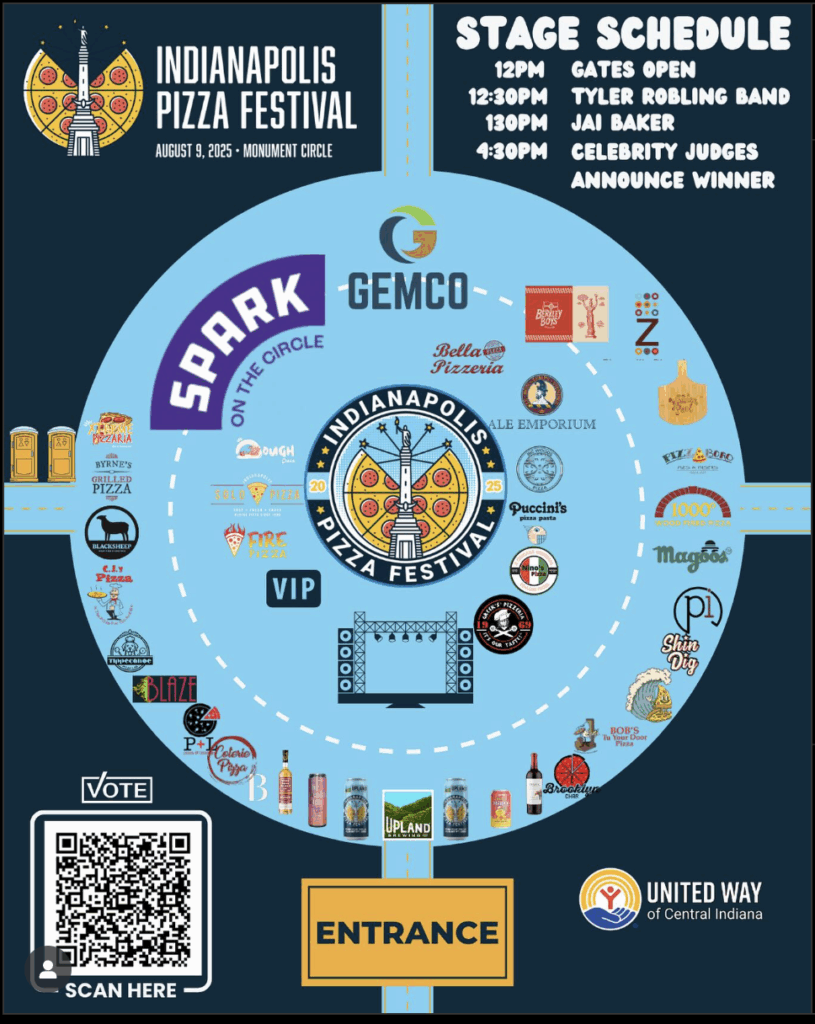
    Map from the Indy Pizza Fest Instagram page showing the entrance and vendors around the event.
    Screenshot by: John Rhorer from @indypizzafest Instagram post.
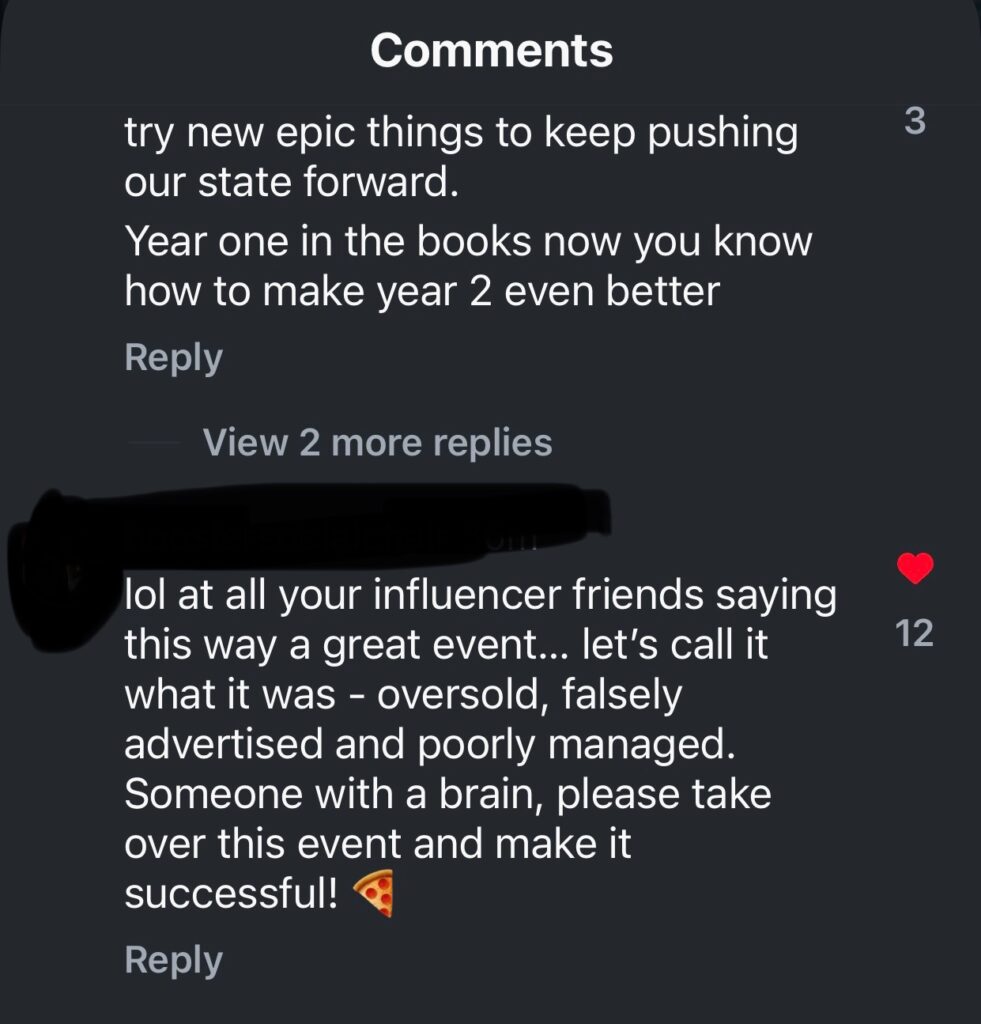
    examples of social media comments from unhappy attendees.
    Screenshot Image from Instagram @indypizzafest post.
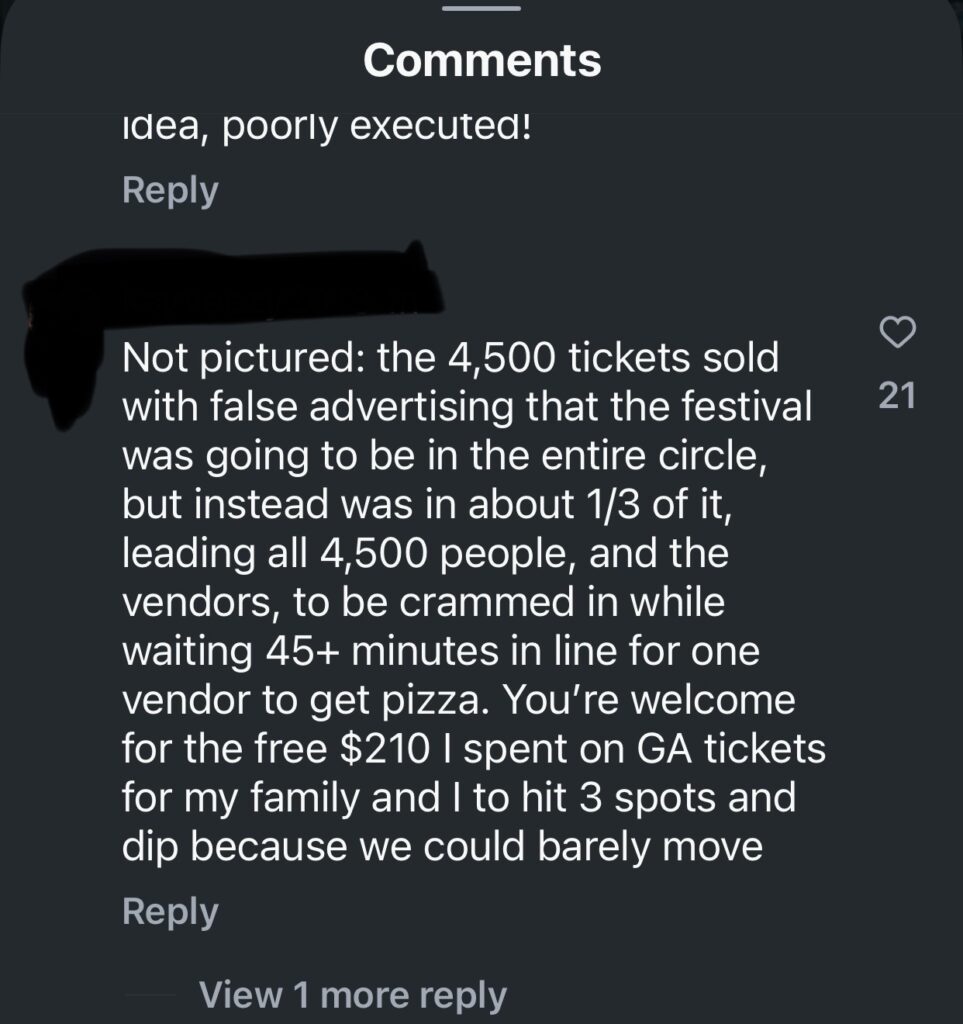
    examples of social media comments from unhappy attendees.
    Screenshot Image from Instagram @indypizzafest post.
    Video By: John Rhorer (August 2025) Short video example of my brief experience at Indy Pizza Fest.

  • Editing Wikipedia: The Wolf Entertainment Article

    Editing Wikipedia: The Wolf Entertainment Article

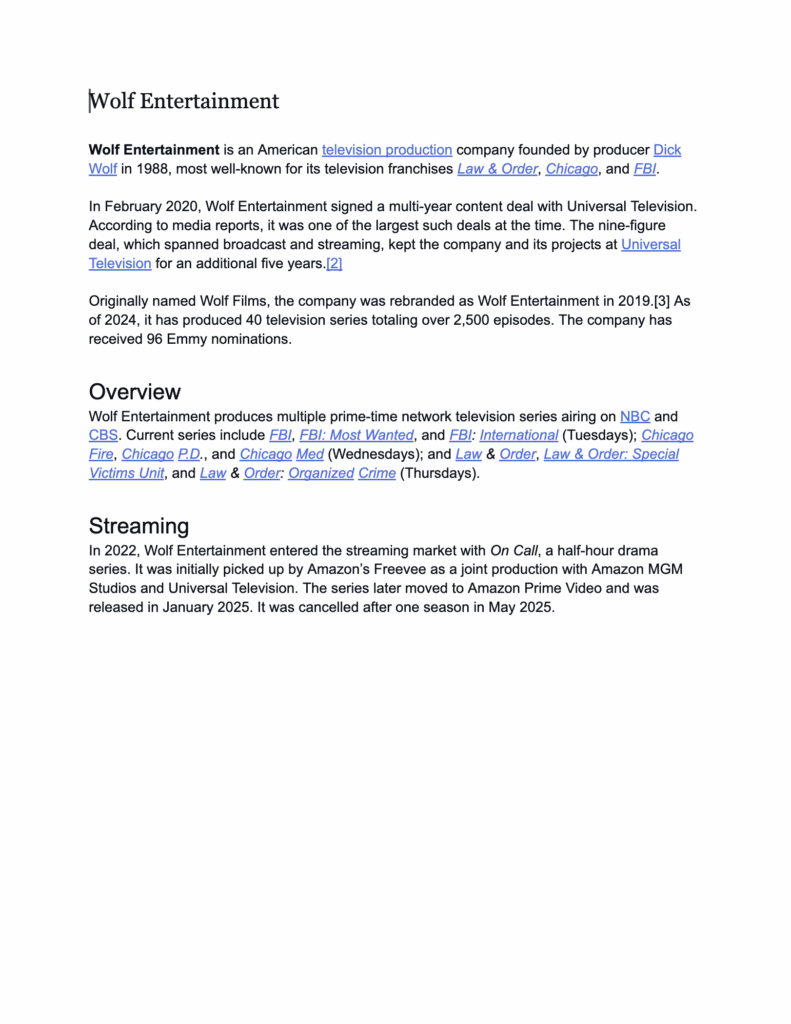
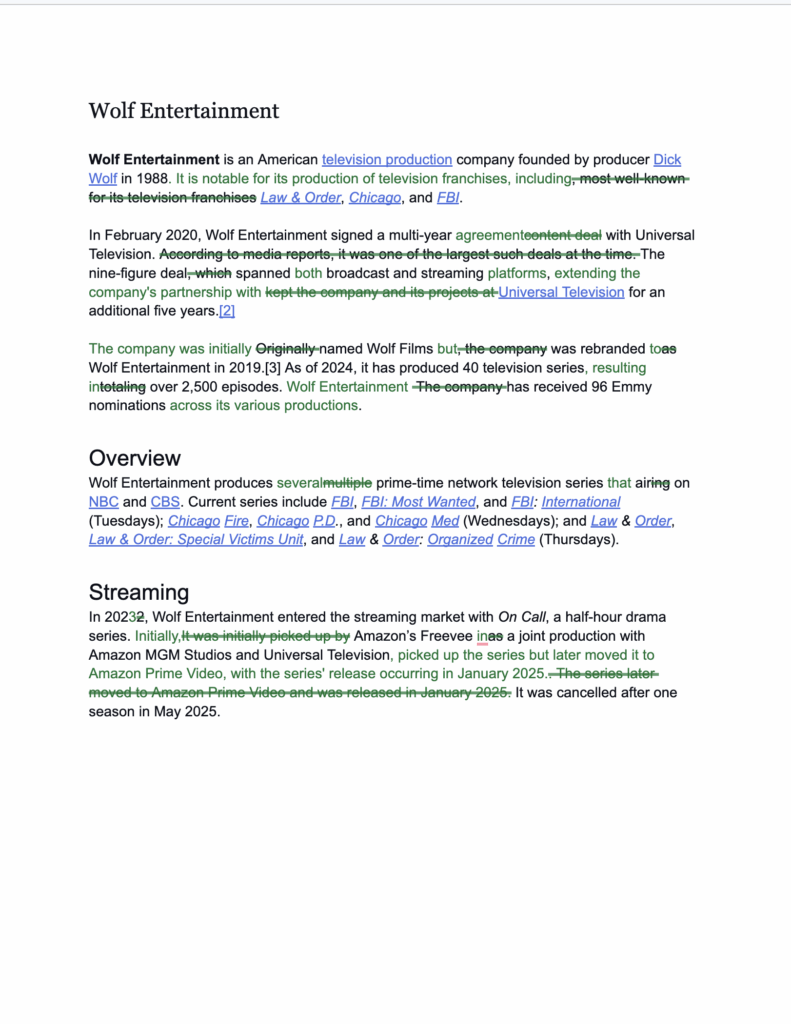
    Here are the changes I made in suggesting mode on a Google Doc showing the original language from Wikipedia.
    Screenshot of original language for Wolf Entertainment Article on Google Doc. Curated By: John Rhorer July 2025.
    Here are the changes I made in suggesting mode on a Google Doc displays the modified language.
    Screenshot displaying modified language of Wolf Entertainment article. Curated By: John Rhorer July 2025.
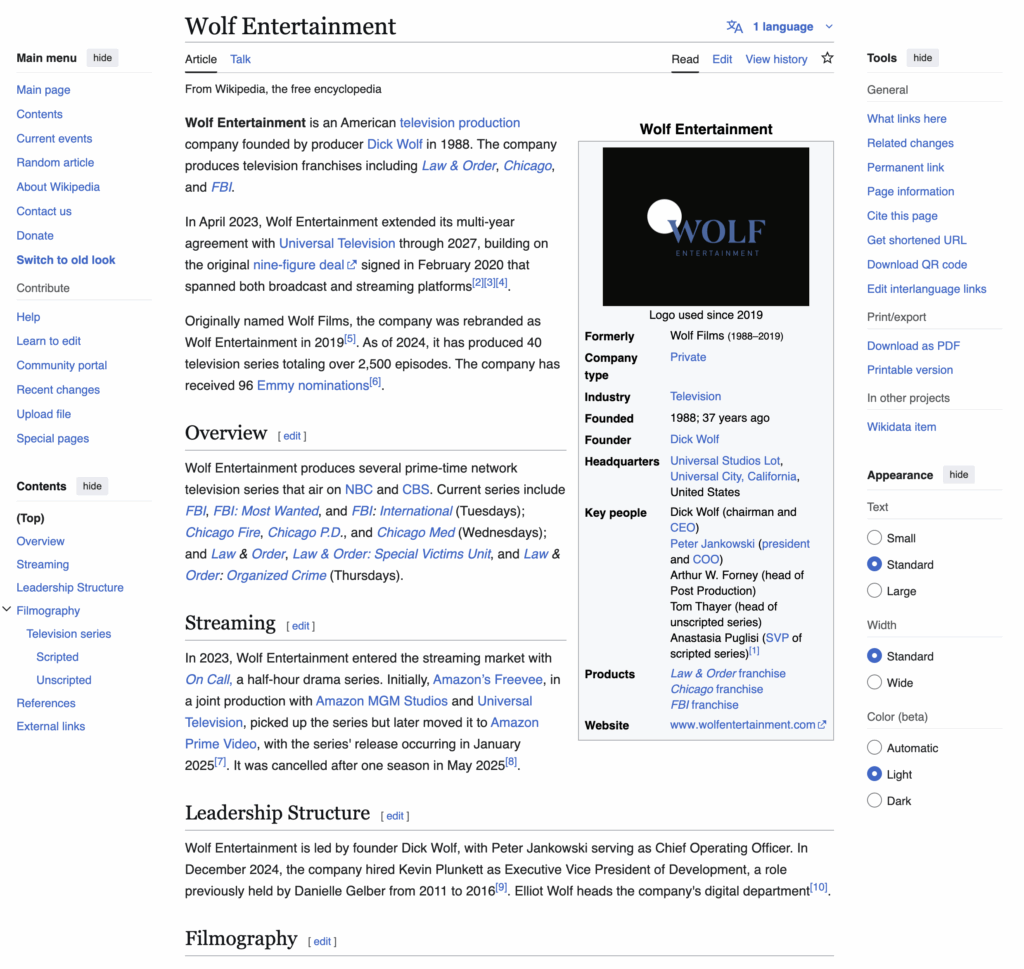
    Screenshot of the Wolf Entertainment article on Wikipedia immediately after John made the edit.
    Screenshot of Wolf Entertainment Wikipedia Article. Curated By: John Rhorer July 2025.
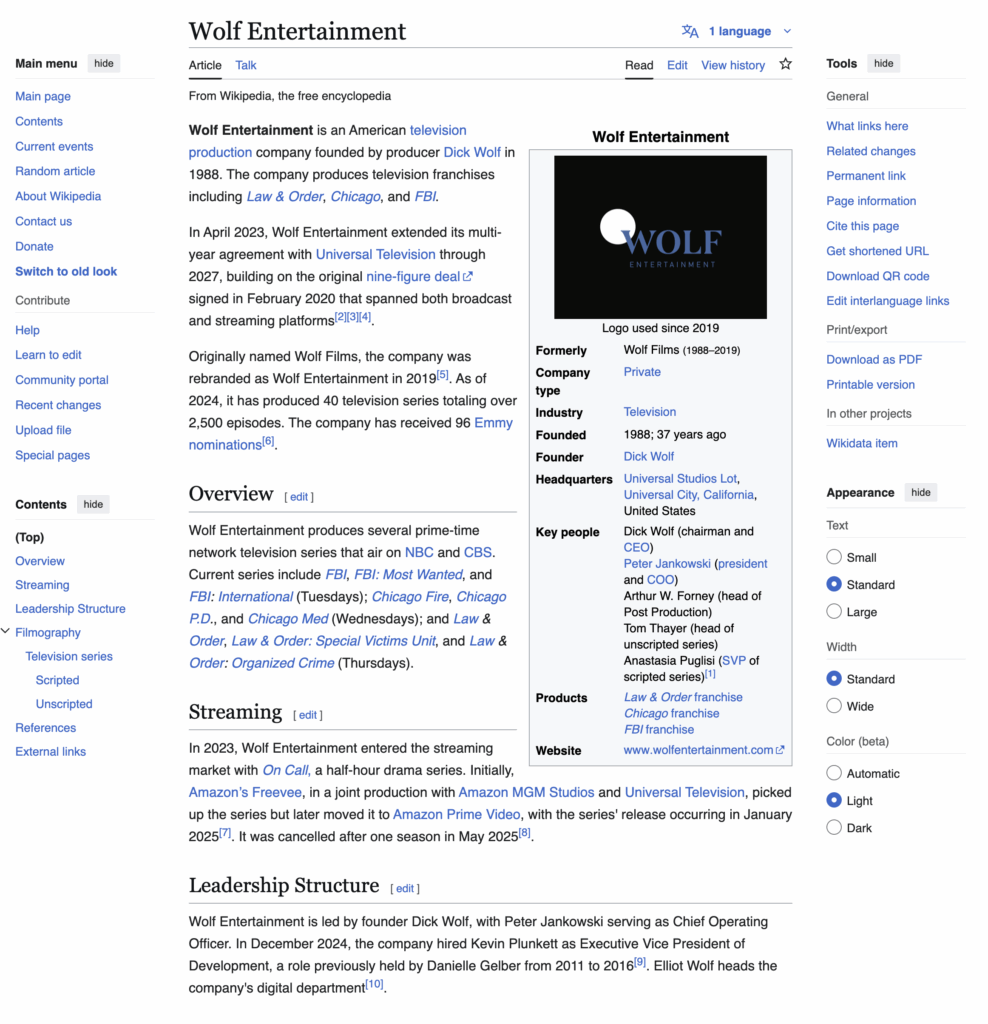
    Screenshot of the Wolf Entertainment article on Wikipedia days after John made the edit.
    Screenshot of Wolf Entertainment article, days after editing. Curated By: John Rhorer July 2025.
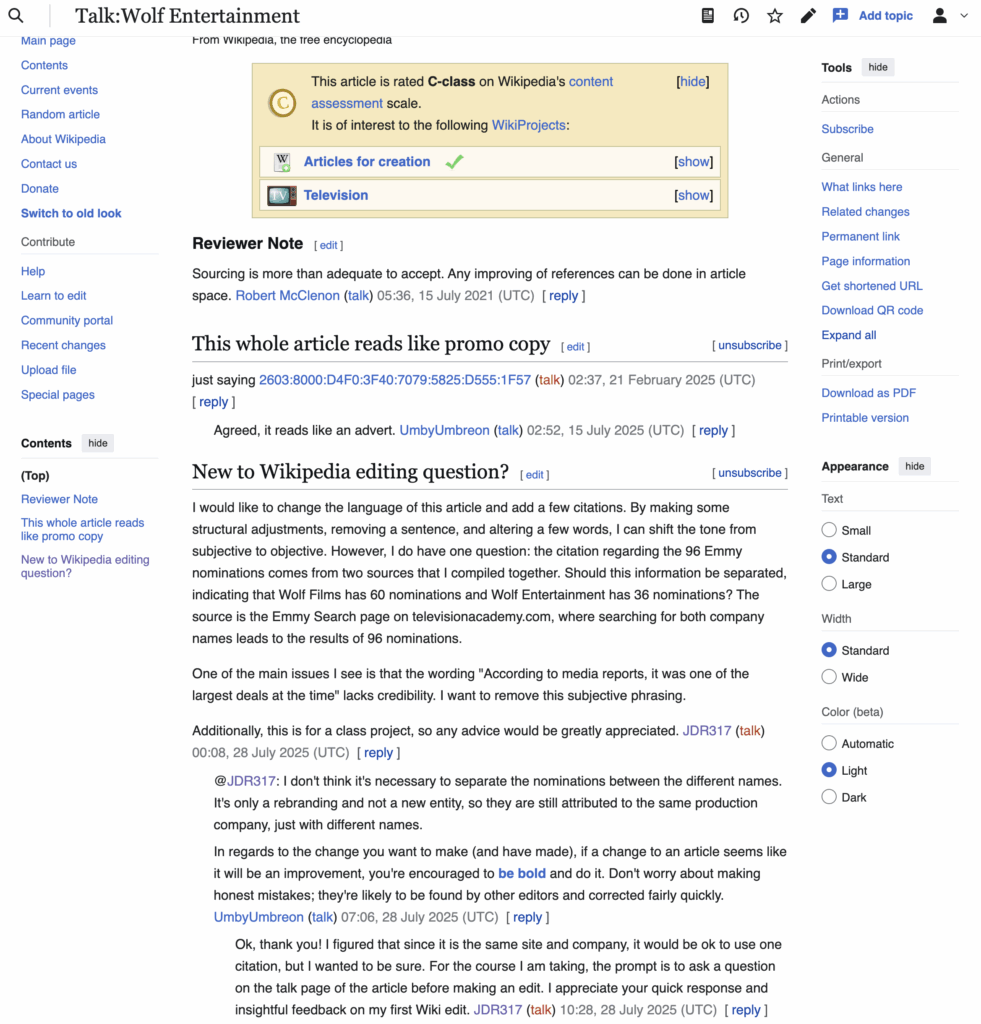
    Screenshot of talk page conversation for Wolf Entertainment Article Curated By: John Rhorer, July 2025
    Screenshot of talk page conversation for Wolf Entertainment Article Curated By: John Rhorer, July 2025

  • Who Owns Our Conversations?

    Who Owns Our Conversations?

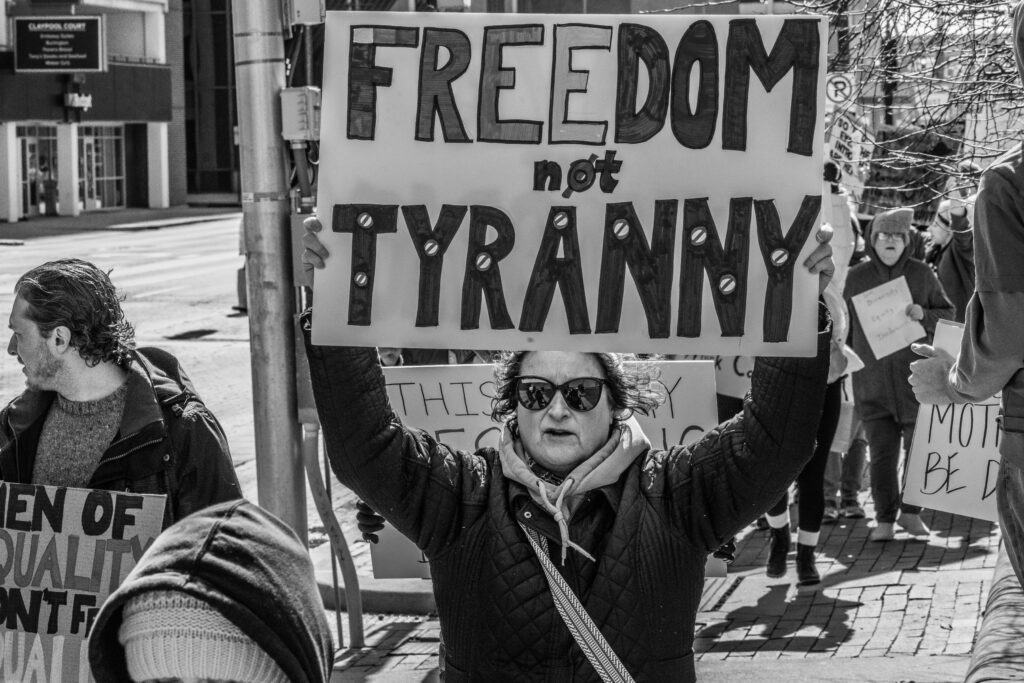
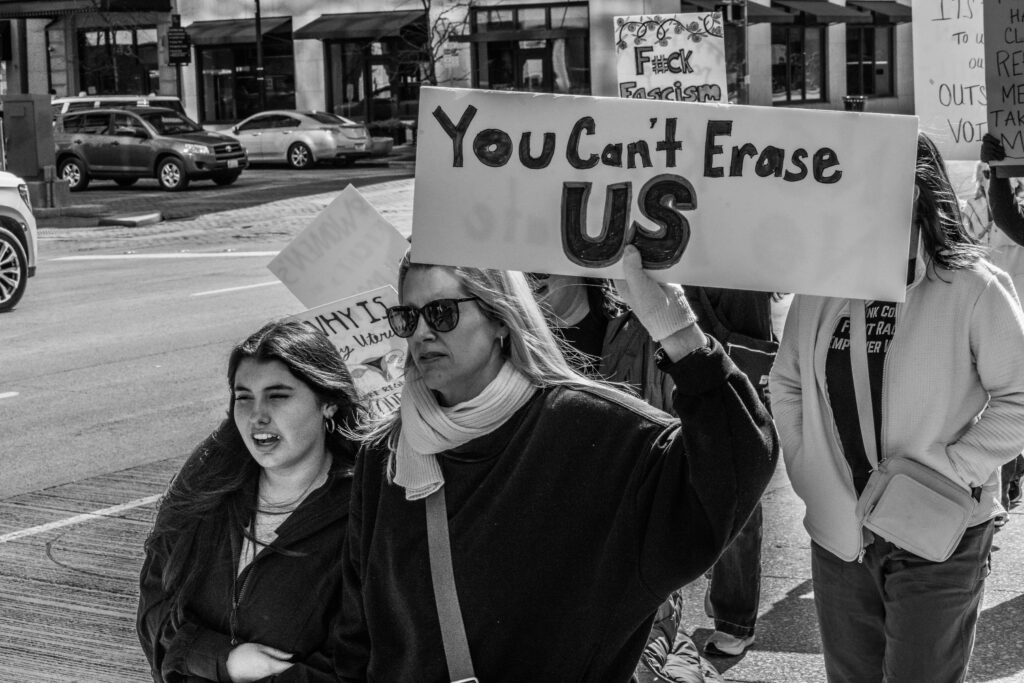
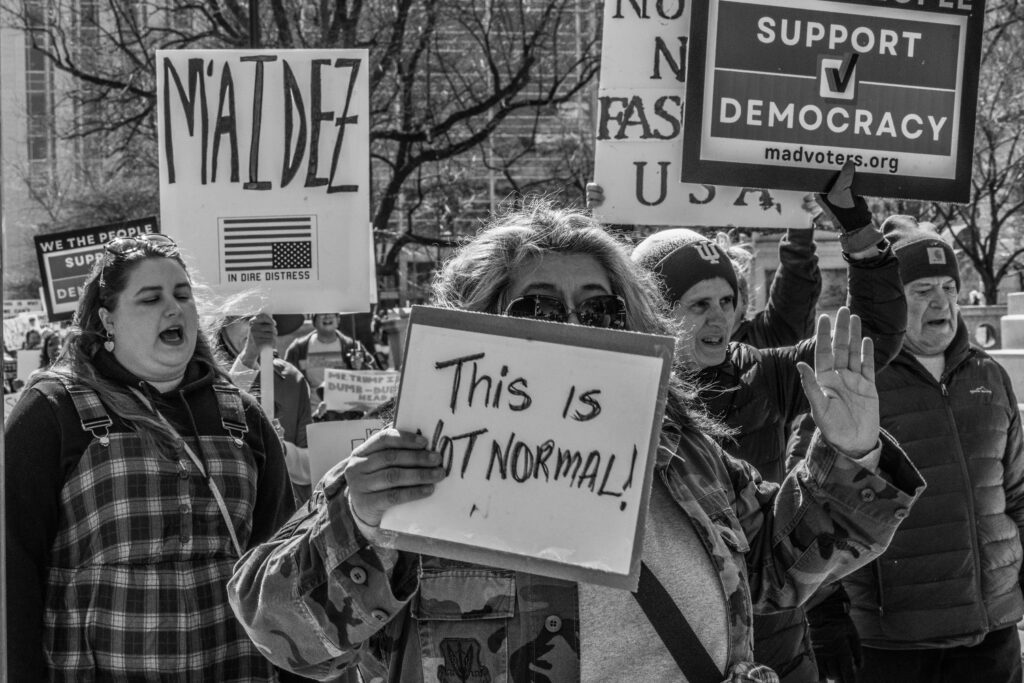
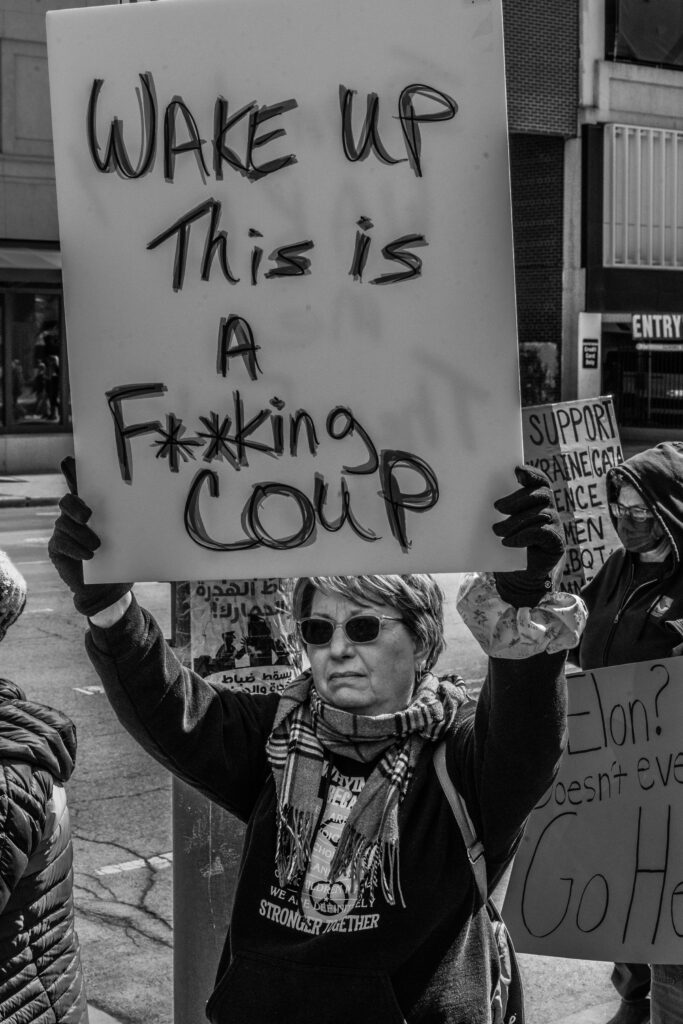
    Demonstrators convene in Indianapolis for the No King protest, expressing their sentiments in response to the rise of right-wing extremism.
    Image by John Rhorer, June 2025 (Demonstrators convene in Indianapolis for the No King protest.)

    I have begun to lock down most of my social media accounts and remove context collapse from some of them. I set up a couple of Instagram accounts: one will showcase my photography and serve as a business account, while the other will be private with no hashtags. The private account will focus on curating a project of daily photographs.

  • Exploring AI Text Generation: Correcting Factual Errors in a Comparison of Camera Specifications.

    Exploring AI Text Generation: Correcting Factual Errors in a Comparison of Camera Specifications.

    AI-generated example of a blog post about the key differences between the Fuji X-Pro3 and the Sony A7RIII cameras. Screenshot of John's Google Doc.
    Screenshot of John’s Google Doc. Capture of response provided by Nova ChatGPT Unedited (July 2025)
    AI-generated example of a blog post about the key differences between the Fuji X-Pro3 and the Sony A7RIII cameras. Screenshot of John's Google Doc Edit suggested copy.
    Screenshot of John’s Google Doc. Capture of response provided by Nova ChatGPT Edited (July 2025)
    Corrected and linked example for a blog post about the key differences between the Fuji X-Pro3 and the Sony A7RIII cameras. Screenshot of John's Google Doc.
    Screenshot of John’s Google Doc. Edited and written in John’s voice using hyperlinks (July 2025)
  • Exploring Cuba: A Life-Changing Journey Beyond the Classroom

    Exploring Cuba: A Life-Changing Journey Beyond the Classroom

    Video by: John Rhorer (Cuba May 2025)

  • My Journey to Cuba as a Nontraditional Student: A Real Experience, Not a Stock Photo or AI-Generated Trash!

    My Journey to Cuba as a Nontraditional Student: A Real Experience, Not a Stock Photo or AI-Generated Trash!

    Image of three classic cars in Cuba's Revolution Square. Image captured by John Rhorer
    Classic car tour of Havana, Cuba. May 2025. Photo by: John Rhorer
    A pale blue American made classic car sitting in front of Jose Marti' Memorial in Havana, Cuba. Photograph Taken by Emilio Dellepiane ManyMoonsPhoto.com Licensed through Adobe Stock CC https://stock.adobe.com/images/auto-a-cuba/100374692?prev_url=detail
    Stock photo by: Emilio Dellepiane. May 2013. www.ManyMoonsPhoto.com Download from stock.adobe.com
    AI-generated image from NOVA AI by John Rhorerof a Turquoise American made classic car in what appears to be Cuba with palm trees and building around a monument.
    AI-generated image produced by Amazons novaapp.ai.
  • From one extreme to another: Will we ever return to the center and unite?

    From one extreme to another: Will we ever return to the center and unite?

    After attending and photographing the women’s march this past weekend, I have started reflecting more on my “Centerist” views and what it would take to bring the far-right and the far-left back to a more suitable position than where we are in our current political landscape. In recent years, politics in the United States become increasingly more divided, with extreme far-right and far-left ideologies dominating national discussions and policies.

    The Dangers of Extremism

    Far-right and far-left extremism are contributing factors to the polarization we see today in politics. There has been a breakdown of communication and bipartisanship between Republicans and Democrats, more so now than in the past. In my view, shaped by my experiences throughout my lifetime, a significant turning point came with the election of America’s first black president, Barack Obama. Although he wasn’t my preferred candidate at the time, I grew to respect him and appreciated the way he communicated. In hindsight, Obama embodied what the U.S. needed to recover from the Bush era. In his book “American Grand Strategy in the Age of Trump,” Hal Brands discusses how Obama’s approach during his presidency focused on being more cautious, efficient, and precise in military engagements. He also re-emphasized the importance of diplomatic relations with both allies and adversaries. Additionally, Obama’s administration adapted American policy to consider the Asia-Pacific region’s rising significance as a key player in 21st-century geopolitics and economic relations.

    While I don’t agree with some of the methods the U.S. has employed in spreading democracy—often imposing its influence on smaller nations by placing a boot on their throats—I do believe these geopolitical actions have contributed to our safety. In stark contrast, Trump’s approach has been marked by chaos, which is a significant shift from the strategies of the Biden and Obama administrations. The phrase “America First” became a constant refrain during Trump’s campaign and continues to echo in his presidency. This isn’t the first time we’ve seen an isolationist platform or the “America First” slogan; Buchanan ran on a similar agenda against George H. Bush.

    However, this isolationism is driving a wedge between us and our allies, making us less secure than we once were. Agreements forged years ago have been broken, leaving disorder in their wake. The rise of far-right extremism not only fuels nationalism but also emphasizes White Christian Nationalism, favoring these interests over international cooperation and longstanding commitments.

    During Biden’s administration, the far left often overlooked the views of moderates and centrists, a trend that is similarly observed with the far right. This disregard has contributed to the Democrats’ struggles, particularly evident in the recent election. Many moderates are independent voters, and failing to win their support has significantly undermined the Democrats’ chances of success. To regain electoral ground, they need to shift closer to the center, stepping back from extreme positions to appeal to a broader audience.

    It’s important to recognize that if you don’t fully resonate with Trump, you’re not alone—many Republicans do not identify with the MAGA movement. However, expressing any differing opinions may jeopardize your political career, as deviations from the party line are often met with hostility and aggression, resulting in the use of derogatory language in public discussions.

    While the Biden administration has taken a more lenient stance on immigration, Trump’s policies are often criticized as xenophobic, driven by anti-immigrant sentiments that have led to increased deportations and exclusionary practices.

    The far-left policies within the LGBTQ+ community appeared to come on too quickly. Liberal DEI initiatives were not introduced gradually into the mainstream; instead, they were forced on people who were not ready for change. The same can be said for Christians shoving their religion down everyone’s throats instead of a gradual introduction. One thing I have learned is people do not like being forced into compliance. It is important to educate and allow them to choose for themselves. Instead, both have been launched into our lives at full speed, akin to being shot from a cannon. The far-right and Trump’s policies seem intent on erasing the efforts of Democrats swiftly, signing executive orders that wipe away progress in an instant.

    What we’ve witnessed is a complete rollback of advancements, and this trend will likely continue if the polarization between the two parties persists. It’s becoming increasingly difficult for lawmakers to come together and find bipartisan solutions to pressing issues. As highlighted in Trump’s speech to Congress, there’s a growing reluctance to engage in meaningful dialogue. Consequently, this stifles any chance for growth and significant reforms, leaving citizens feeling unrepresented in the political arena.

    The Value of Centrism

    What is Centrism? Defining it precisely can be a challenge, but here’s my take. Centrism isn’t about being far-right or far-left, and it doesn’t necessarily mean positioning oneself exactly in the middle. Centrists typically shy away from radical beliefs and resist drastic policy changes. Instead, we focus on uniting people through compromise and open dialogue. Given the rich diversity of the U.S., it’s essential to include everyone, irrespective of race, religion, sexual orientation, or any differences we might have. Our aim isn’t to play into partisanship but to address the needs of the entire population. Centrists actively seek compromise and strive to understand a wide range of perspectives. There’s no need to feel cornered into simply accepting everything that Trump or Biden says, forcing you to pick a side. I stand neither on the far-right nor the far-left. If we could gather around a dinner table and share a meaningful conversation over a beer or two, I believe most of us would find ourselves somewhere in this middle ground.

    What we truly desire is for our voices to be heard and for our tax dollars to be spent wisely. We want safety in our nation and local communities, along with affordable housing and groceries—it’s a given. Affordable healthcare is also essential, free from the constraints of insurance companies. Our aim is to provide a quality education for our children so they can build a better future than we did. We long for a thriving economy, the ability to retire comfortably, and to enjoy our golden years. Furthermore, we want basic human rights to flourish, allowing us to love whomever we choose. I’m sure I’ll miss out on a few desires, and I welcome the feedback, but the core message remains clear: we all want the same fundamental things in life. The question is how to achieve them, which often proves to be the tough part. Is it through extreme politics or polarizing views? My answer is a resounding “no!” We, the people of this great country, can only attain our goals and needs through collaboration and unity.

    Throughout history, there have been notable instances where a centrist approach proved beneficial for the majority of Americans, illustrating the effectiveness of both parties working together. For example, during the 1980s, Democrats collaborated with Republicans under the Reagan administration. Similarly, Abraham Lincoln’s Vice President, Andrew Johnson, was a Democrat known for surrounding himself with rivals and individuals who held opposing views. Lincoln believed it was essential to include the nation’s brightest minds in his cabinet, regardless of their disagreements. Another significant example is the Civil Rights Act of 1964, which saw 27 Republicans join forces with 44 Democrats to conclude discussions and pass the legislation. These examples highlight how bipartisanship and a centrist stance can truly benefit the nation.

    The Benefits of a Centrist Approach

    Adopting a centrist or moderate approach to politics is a more effective way to address the needs of the population. We must steer away from extreme partisanship to develop policies that create a meaningful impact on Americans’ lives. Take the healthcare reform debate, for example, a centrist viewpoint might advocate for a blend of public and private options. This balanced perspective recognizes the importance of accessible healthcare while also taking into account the preferences of those who prioritize choice and competition in the private sector. Consequently, centrist policies often enjoy wider acceptance across the political landscape, helping to minimize polarization and prevent gridlock in the legislative process.

    We are currently witnessing a growing trend of division and hostility in political discussions, especially on social media platforms. Every day, we encounter messages that are driven by an “us vs. them” mentality, evident in various posts, comments, and the coverage from partisan media sources. Instead of fostering this divisiveness, we should promote open dialogue rooted in mutual respect. This is where centrists truly shine, as they create a collaborative environment that welcomes individuals from diverse backgrounds and beliefs to engage in meaningful conversations. For instance, community initiatives that embrace a centrist approach are more likely to bring together people from different political affiliations to tackle common issues, such as education and public safety. By doing so, centrists can play a crucial role in building a more united and functional society, ultimately leading to better governance and a stronger sense of shared purpose among citizens.

    Overcoming Challenges

    As voters, it’s completely understandable to feel outraged by the myriad challenges we face today. We are currently dealing with skyrocketing inflation, daily drops in the stock market, cuts to government-funded aid, and a freeze on financial support for the war in Ukraine. To make matters worse, there’s a concerning rise in misinformation spreading on social media, which often traps far-right voters in echo chambers that only reinforce their existing beliefs. One of the toughest battles we must confront isn’t just the dissemination of false information but also the attitude of the MAGA core, which seems largely indifferent to the truth. They thrive on controversy and show little interest in fact-checking or recognizing the inaccuracies surrounding their claims. MAGA supporters appear to fully back whatever their leader does, much like the loyal far-left Obama supporters during his presidency.

    To heal our nation, we must seek common ground. We must unite and engage in open discussions about our challenges, cutting through the misinformation surrounding us. Now is the time to think for ourselves and enhance our media literacy.

  • Exploring Civic Imagination through the film “Black Panther”: Why it stands out.

    Hello, blog universe! This week in my Digital Media Literacy class, we started learning about the concept of the Civic Imagination Project. It’s all about recognizing our roles as civic agents to spark change, build a sense of collective identity, and embrace empathy for others, especially those who may be different from us. As a huge Marvel fan, I couldn’t resist choosing “Black Panther” as my focus for this composition.

    So why “Black Panther“? Well, it stands out from the typical superhero narrative by emphasizing the power of the collective over the individual. This film is a reimagining that challenges how many of us view African identity through the lens of American media.

    “Black Panther” was directed by Ryan Coogler and hit theaters in 2018, “Black Panther” features the late Chadwick Boseman as T’Challa, the king of the technologically advanced fictional African nation of Wakanda. The film opens with a glimpse into the socio-economic struggles in Oakland, California, in 1992 before returning to the world of Wakanda, a place rich in African culture and cutting-edge technology. Through this contrast, “Black Panther” depicts Wakanda and its people in a positive light through identity, empowerment, and community, pushing back against the negative stereotypes often associated with Africa.

    The film is reimagined as an alternative to the historical views many perceive of the African continent and its people, with images of poverty and conflict. Instead, the film repositions the African people as leaders and stewards instead of casting them as victims of years of historical injustices. Watching this film allows audiences to rethink preconceived notions about Africa’s cultural diversity and its innovative spirit.

    The narrative told throughout “Black Panther” is not just about entertainment; it’s about sparking change in how stories are told surrounding culture. The film not only depicts African culture positively but further showcases the incredible strength of sisterhood among its female characters, revealing their vital leadership roles within Wakandan society. It tackles the complexities of race and culture, encouraging us to see ourselves as potential agents of social change. This reexamination of our societal attitudes calls for a systemic change in how we portray African experiences and the values of gender and racial equality.

    One of the standout moments for me is the speech at the end of the movie, where T’Challa addresses the United Nations and delivers a resonant message: “We will strive to be an example of how we, as brothers and sisters on this earth, should treat one another. Now, more than ever, the illusions of division pose a threat to our very existence.” These words not only underline the need for unity but reflect the heart of civic imagination itself.

    “Black Panther” is playing a vital role in dismantling long-standing stereotypes about race, African culture, and gender roles. It has made the Black community feel seen and sparked necessary dialogues around representation. Plus, let’s not forget how the Wakanda Forever salute has become a pop culture phenomenon, akin to the three-fingered salute from “The Hunger Games.” The visibility for social justice and cultural identity since the film’s release has been remarkable, even though Wakanda itself is an aspirational idea.

    To wrap it up, “Black Panther” is more than just a superhero movie; it’s a cultural milestone redefining narratives about African identity and empowerment. Its influence stretches beyond entertainment, inspiring us to envision a future where diversity and innovation thrive. Engaging with such transformative works not only broadens our perspectives on social issues but also fuels our passion for advocating positive change. As we lift up diverse narratives, we move closer to the ideals of unity, respect, and equity that “Black Panther” so powerfully embodies.

  • Media Stereotypes: The Portrayal of Father Figures in Media

    The assignment this week was to identify a stereotype about ourselves that we have seen in the media. As a divorced middle-aged father of two, I have witnessed the portrayal of the father figure and dads like me frequently depicted as out of touch, pitiful, irresponsible, or even incompetent in media, especially sitcoms. However, these stereotypes miss the mark regarding the reality of our lives and experiences. While some representations might resonate with certain people, they don’t capture the whole picture.

    Looking back at my time growing up watching reruns of “The Andy Griffith Show” and “Leave it to Beaver,” the father figure was depicted as a wise authority figure. Fast forward to today, and we see a stark contrast in series like “Modern Family” and “Everybody Loves Raymond,” where fathers are often depicted in a humorous yet inept light.

    In the media today, we often see the portrayal of dads as clueless, stuck in their ways, and frequently on the receiving end of a joke. Knowing I am not the only one who feels this way, I searched for some studies and found a study from UCLA that examined 34 top-rated sitcoms that aired between 1980 and 2017, analyzing 578 scenes where fathers engaged in “disparagement humor.” In these moments, dads either took jabs at other characters or found themselves on the receiving end of the humor.

    Sadly, the portrayal of fatherhood today is often skewed. These narratives commonly overlook single fathers who are actively engaged in their children’s lives and fail to represent fathers from marginalized communities. The missing narrative reinforces harmful stereotypes that link fatherhood to irresponsibility and often criminality.

    The most persistent stereotype that we see ties masculinity to emotional incompetence. Viewing men as incapable of nurturing paints an unfair picture of gender roles in the family. Interestingly, research points out that fathers are depicted negatively in today’s media a staggering eight times more often than mothers. The skewed representation distorts the real understanding of family roles. Often, the narrative shifts the emotional roles squarely onto the role of the mother, which undervalues them, and the father’s role.

    The portrayal of father figures in the media often lacks depth and variety. It’s important to challenge these narratives and reshape public perception. Rather than depicting fathers in a one-dimensional way, we should showcase them in a diverse range of stories and situations that accurately reflect their roles in family life. By doing so, we can create a more balanced view of fathers, which can benefit families as a whole and contribute to greater equality in gender roles within the context of family dynamics.

    Examples

    TV Show: “Modern Family”

    Ty Burrell’s character, Phil Dunphy, is often portrayed as a goofy, oblivious dad, which is designed for comedic effect. Although loving and well-meaning, he struggles with parenting concepts and household tasks. These imperfections humanize his character, but they also contribute to the stereotype of the bumbling father figure, making many father characters seem out of touch with parenting.

    Movie: “Daddy’s Home 2” (2017)

    The movie stars Will Ferrell and Mark Wahlberg, who portray two co-parenting fathers alongside their own fathers. Will’s character, Brad, is a sensitive and accommodating parent who often feels overshadowed by Mark’s character, Dusty, who takes a rugged and reckless approach to parenting. The humor in the film revolves around Brad’s ongoing struggle to prove himself as a capable father, reinforcing the stereotype that sensitive and nurturing fathers are less competent than those who exhibit more traditionally masculine emotions.

    Stereotypes about fatherhood in media can harm both men and society. When fathers are shown as poor caregivers, it enforces the old idea that emotional care is only a woman’s job. This discourages men from taking on nurturing roles and leads to a culture where emotional involvement is not valued.

    These portrayals may aim to challenge traditional gender roles, but they often fail to make real change. Instead of breaking stereotypes, they can make men feel disconnected and inadequate as parents. This results in both men and women struggling with unrealistic expectations created by these exaggerated images.

    The “dumb dad” stereotype has become an overused choice for writers looking to add humor or drama. While it can be funny, it also supports a negative view of fatherhood. By relying on this cliché, media writers miss the chance to show a more realistic picture of fatherhood that honors the emotional role of fathers.

    As media consumers, we need to understand the impact of these stereotypes and push for more genuine representations of parenting. By encouraging a balanced view of fatherhood, we can help create a culture that values emotional intelligence in all caregivers, benefiting families and society overall.

  • Sandy Hook: A Look at the Persuasive Use of Misinformation

    It was a cold Friday morning, December 14th, 2012, in Newtown, Connecticut, where 20-year-old Adam Lanza began his murder spree by killing his mother, Nancy. He then grabbed three firearms from the residence and left for Sandy Hook Elementary School. Adam armed himself with a semi-automatic AR-15 Bushmaster rifle and two semi-automatic handguns made by Glock and Sig Sauer. I am naming these firearms because the information will be relevant later.

    Once he arrived at Sandy Hook, the doors were locked with a security upgrade that required visitors to be buzzed in. The gunman, as he was described at the time, shot his way through the door to gain entrance to the school. He then started by killing teachers and students in a kindergarten and first-grade class. Adam would end up killing 20 children between the ages of 6 and 7, as well as 6 adults. As officers approached, Adam turned the gun on himself.

    The school shooting was a horrific event that shocked the nation. Debates about gun control, mental health, and the safety of schools were reignited. The aftermath of this tragedy also gave rise to one of the most persistent and controversial conspiracy theories of our time: the belief that the shooting was staged or fabricated.

    The day following the tragic shooting, Robbie Parker, one of the parents of the young victims, stepped forward to speak publicly about the incident. Before he began, he offered a nervous half-laugh, which was captured on camera as he started to share his memories of his daughter. This moment, however, was repeatedly aired by Alex Jones, a far-right conservative and conspiracy theorist who runs a radio show and operates a website called InfoWars.

    Jones would deny that the Sandy Hook shooting was real and spread information, claiming it was a massive government conspiracy aimed at infringing on the rights of gun owners. The types of guns used in the shooting were repeatedly featured in the media, which fueled this narrative and provided Jones with material to support his cause by labeling them as assault weapons. This was particularly significant following the recent reelection of President Obama and a fabricated plot suggesting the confiscation of Americans’ firearms.

    Social media also plays a significant role in the spread of misinformation by quickly sharing unfounded claims and speculation from amateur investigators without proper fact-checking. These conspiracy theorists on social media often promote misinformation, claiming to have conducted years of research using public records and other accessible information. They highlight errors in reporting and react to the views of parents, further contributing to the confusion.

    Alex Jones sells fear and the belief that there is order within the chaos to mostly uneducated people who already have a confirmation bias. His tactics and those of others like him use more advanced forms of persuasion, some of which can be found in “The Language of Persuasion.” I want to name a few, but I encourage you to check out the link and read more about the techniques for yourself.

    The top three techniques I witnessed being used to persuade his followers are:

    1. Cause vs. Correlation: This tactic persuades others to follow the idea that where there is smoke, there must be fire. Another way to explain this is by saying that using umbrellas during a rainstorm suggests that the umbrella caused the rain.
    2. Diversion: Jones distracts us from a problem by introducing unrelated issues, convincing his viewers while concealing parts of the story to enhance his narrative.
    3. Card Stacking: By selectively presenting specific information, Jones manipulates the narrative to support his argument.

    The damage caused by the spread of misinformation, while not as prevalent in the media today regarding the Sandy Hook shootings, still persists. Even after InfoWars and Alex Jones have been sued multiple times for defamation—resulting in significant financial penalties to the families of the slain children—there are still people who believe it was a hoax and a conspiracy aimed at infringing on the Second Amendment rights of gun owners.

    Families of Sandy Hook victims have actively campaigned for gun control and have publicly confronted conspiracy theorists. They have documented their experiences, participated in interviews, and pursued legal action against those spreading lies about them. This has garnered both sympathy and support on a larger scale but has also made them targets of retaliation by conspiracy theorists.

    We can all agree that Sandy Hook was a deeply tragic event, and the circulation of misinformation has only added to that tragedy. The spread of misinformation has eroded public trust in the media and widened the divide during a time when we should be uniting as one within our families and communities.